
Are you thinking about taking the next step in your life in Mexico? If you already have a temporary or permanent resident card, you may be wondering: how can I get Mexican citizenship in 2026?
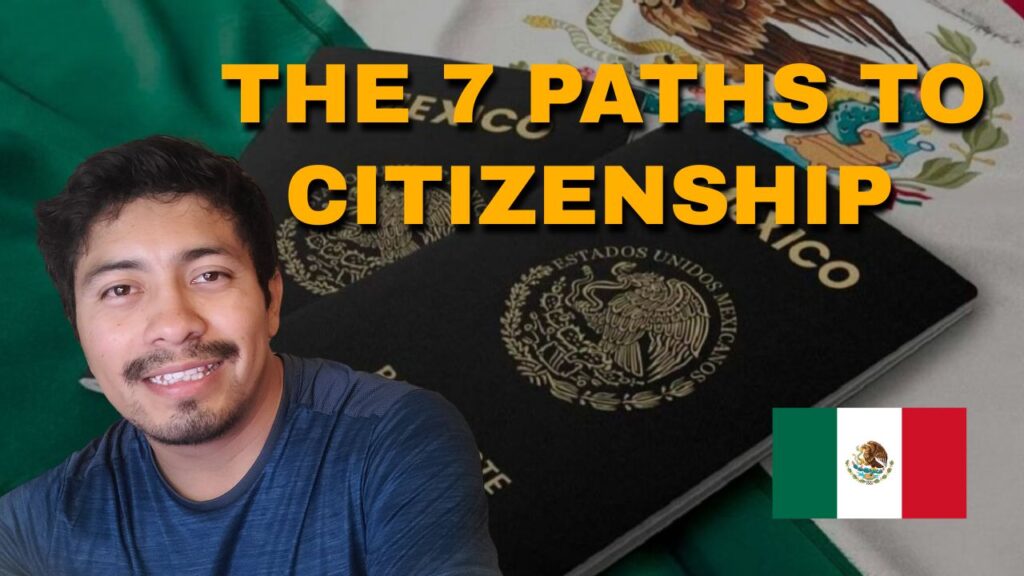
Getting Mexican citizenship (naturalization) is more than a legal status. It means full integration into the country: the right to vote, buying property without restrictions, enjoying the benefits of citizenship and traveling more freely with a Mexican passport.
In this guide we break down the Mexican naturalization process, the main paths available in 2026, the benefits, the requirements and the common mistakes to avoid.
What are Mexican citizenship and naturalization?
Mexican citizenship is a legal status granted by the Mexican government that allows foreigners to become full members of the Mexican State.
Unlike residency, which gives you the right to live in Mexico with certain limits, citizenship gives you the same rights and obligations as a Mexican citizen by birth.
A key point: once naturalized, you are considered a full Mexican citizen. You must show your Mexican passport whenever you are asked for it, even if you still hold another nationality.
Main benefits of becoming a Mexican citizen
Why apply for Mexican nationality if you already have residency? These are the main benefits in 2026:
✅ The right to vote and take part in Mexican democracy.
✅ No more bank trust (fideicomiso): buy property in restricted zones (such as beachfront) directly in your name.
✅ Mexican passport: considered one of the most powerful in the world, with visa-free access to more than 160 countries.
✅ Access to all citizen benefits: government programs, senior cards, health services and scholarships.
✅ Security and stability: you can never be asked to leave Mexico, unlike with temporary or permanent residency.
Different paths to Mexican citizenship in 2026.
There is no single way to get citizenship. Depending on your circumstances, some options are much faster than others.
1. Citizenship through residency
The most common path.
- Requirement: 5 years of legal residency in Mexico immediately before your application, with a temporary or permanent resident card (art. 20 of the Nationality Law and art. 14 of its Regulations).
- Absences from the country do not break your residency, unless they happen in the 2 years before your application and add up to more than 6 months (art. 21 of the Nationality Law).
- You must pass the citizenship exam.
This is the usual path for most expats.
2. Citizenship through marriage to a Mexican
If you are married to a Mexican citizen:
- You must have lived with your spouse in a marital home in Mexico during the 2 years immediately before your application (art. 20, section II, of the Nationality Law).
- The marriage must be at least 2 years old, and a temporary or permanent resident card is accepted (arts. 14 and 18 of the Regulations).
3. Citizenship through Mexican-born children
If you have children who are Mexican by birth:
- You can apply for permanent residency directly.
- After 2 years of legal residency in Mexico (with a temporary or permanent card), you can apply for naturalization (art. 20, section I, item b).
4. Citizenship for people from Latin America or the Iberian Peninsula
Special rule: if you are from a Latin American country or from the Iberian Peninsula (Spain or Portugal), you only need 2 years of residency before applying (art. 20, section I, item c).
5. Citizenship by descent
If your father or mother is Mexican, you are already Mexican by birth (art. 30, section A, of the Mexican Constitution): you do not naturalize, you claim your nationality by birth.
- If you are a grandchild (direct descendant) of a Mexican by birth, you can naturalize with 2 years of residency (art. 20, section I, item a). If you are a grandchild and hold no other nationality, you are exempt from that period.
6. Citizenship for outstanding contributions
Reserved for people who have made exceptional contributions in fields such as science, culture, business or sports. It is rare, but possible.
7. Refugees
Recognized refugees follow the residency period that applies to them, but they only need to show they speak Spanish (no history and culture exam) and may be exempt from submitting a birth certificate (arts. 15 and 16 of the Regulations).
General requirements for all applicants
- Whatever path you take, you must meet these requirements:
- Valid foreign passport.
- Valid resident card (temporary or permanent), with at least 6 months of validity left when you apply.
- Birth certificate, apostilled and translated into Spanish.
- CURP (Unique Population Registry Code).
- Proof of legal residency for 2 to 5 years (depending on the path).
- A signed statement listing your departures from and entries into Mexico, to count your absences.
- Federal and local certificate of no criminal record.
Mexican citizenship exam: culture and language
To ensure integration, applicants usually must pass:
- Mexican history and culture exam, based on the content set by the SRE’s Instituto Matías Romero.
- Spanish exam.
👉 People over 60, minors and refugees only need to show they speak Spanish (art. 15 of the Regulations).
Apps such as Mexicanidad can help you prepare.
Common mistakes and how to avoid them
❌ Leaving Mexico for more than 6 months in total during the 2 years before your application.
❌ Not updating your address or marital status with the INM.
❌ Submitting expired passports or resident cards.
❌ Underestimating the citizenship exam.
Step-by-step guide to applying for Mexican naturalization in 2026
- Confirm your eligibility (years of residency, marriage, children, etc.).
- Gather your documents (passport, birth certificate, resident card, CURP).
- Schedule an appointment at the Secretaría de Relaciones Exteriores (SRE).
- Take the citizenship exam (unless you are exempt).
- Submit your application and pay the government fees.
- Wait for the decision; this can take several months.
- Receive your naturalization certificate and celebrate your new Mexican nationality!
Conclusion: is Mexican citizenship right for you?
Choosing to become a Mexican citizen in 2026 is a big step, but one that opens the door to full integration, new rights and lifelong security in Mexico.
Whether you are here for family, love, work or retirement, naturalization can transform your experience, from simply living in Mexico to truly feeling part of the Mexican community.
Ready to take the next step? 🇲🇽
👉 Start preparing today, study for the exam and explore which path best fits your situation.
📌 YouTube: Immigration with Luis Chable
📌 Facebook: Immigration Service with Luis Chable
Questions about your case?
Every immigration case is different. In a consultation I review your case and give you a clear written plan. In English, Spanish or French.
Sigue leyendo
Más guías que te pueden servir

Visas · Francia
Visa PVT: vivir y trabajar 12 meses en México siendo francés
Así funciona el Programa Vacaciones y Trabajo entre México y Francia, y lo que nadie te dice sobre trabajar con esta visa.
Trabajo
¿Cómo obtener la residencia en México por oferta de empleo?
Una de las vías más usadas para vivir y trabajar legalmente en México, y uno de los procesos más mal entendidos.

Unidad familiar
¿La unidad familiar permite traer a tu esposa o hijos a México?
Muchos creen que la única forma de obtener residencia es demostrar ingresos altos. La unidad familiar es otra vía.
Ciudadanía
Cómo obtener la ciudadanía mexicana en 2026
Si ya tienes residencia temporal o permanente, este es el siguiente paso: cómo convertirte en ciudadano mexicano.
Keep reading
More guides you may find useful
Visas · France
PVT visa: live and work in Mexico for 12 months as a French citizen
How the Working Holiday Program between Mexico and France works, and what nobody tells you about working with this visa.
Work
How to get residency in Mexico through a job offer
One of the most common paths to live and work legally in Mexico, and one of the most misunderstood.
Family unity
Family unity: can you bring your spouse or children to Mexico?
Many people think the only way to get residency is to prove a high income. Family unity is another path.
Citizenship
How to get Mexican citizenship in 2026
If you already have temporary or permanent residency, this is the next step: how to become a Mexican citizen.